Idaho Window Tint Laws: What You Need to Know in 2026
A complete guide to Idaho's window tinting laws, including legal VLT percentages, vehicle type differences, medical exemptions, and enforcement details.
Co-Founder & Operations Manager · January 30, 2026
Gemstar Car Detailing Nampa was established to set a new standard for excellence in the auto detailing industry. Confused drivers visit our shop every day asking about the latest window film regulations.
We understand that getting your windows tinted in Nampa requires a clear grasp of the rules.
Idaho has specific regulations governing exactly how dark your tint can be. Violating these laws often results in a traffic citation and the costly requirement to remove the film.
Our team has put together this guide on Idaho Window Tint Laws: What You Need to Know in 2026. Let’s look at the exact data. The state specifies exactly which windows qualify and what exemptions exist.
Understanding VLT (Visible Light Transmission)
We start by explaining Visible Light Transmission, or VLT, to every customer. This percentage indicates how much visible light passes through the film and glass combined. A higher VLT percentage means more light passes through, making the tint lighter.
Our technicians know that a lower VLT means less light passes through, creating a darker appearance.
- A seventy percent VLT film allows seventy percent of visible light through and blocks thirty percent.
- A twenty percent VLT film allows only twenty percent of light through.
We point out that Idaho Code Section 49-944 specifies the exact minimum VLT limits. The state officially allows a 3 percent variance in VLT readings during an inspection. Going darker than the legal limit remains a citable offense.
Idaho Tint Laws for Sedans and Passenger Cars
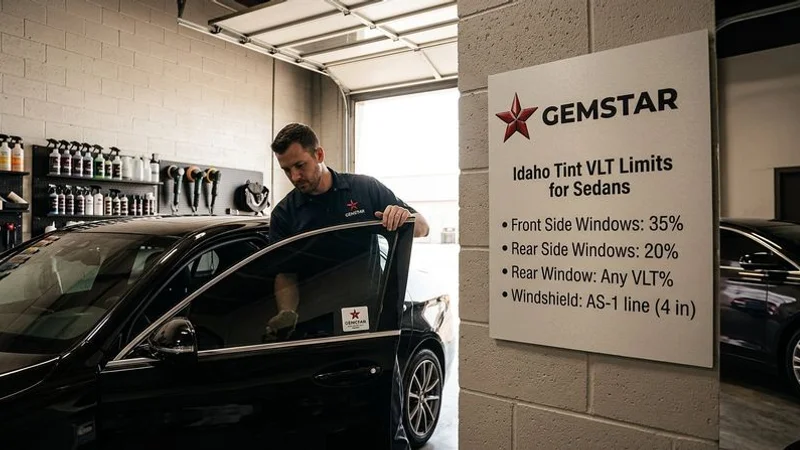
Our sedan customers frequently ask about the specific limits for their vehicles. Idaho law requires clear minimum VLT percentages for sedans, coupes, and standard cars. You must install dual side mirrors if you apply any film to your rear windows.
We break down the exact passenger car rules below to keep things simple:
| Window Type | Minimum Legal VLT | Additional Rules |
|---|---|---|
| Windshield | Untinted | Tint allowed only above AS-1 line or top 6 inches |
| Front Side | 35% VLT | Non-reflective |
| Rear Side | 20% VLT | Requires dual side mirrors |
| Rear Window | 20% VLT | Requires dual side mirrors |
Windshield: Non-reflective tint is allowed down to the manufacturer’s AS-1 line or the top six inches. Front side windows: These must allow at least thirty-five percent VLT.
We apply films that keep your front driver and passenger windows perfectly compliant at thirty-five percent. Rear side windows: State law dictates these must allow at least twenty percent VLT. Rear window: This glass must also allow at least twenty percent VLT.
Idaho Tint Laws for SUVs and Trucks
Our shop sees a massive volume of SUVs and trucks in the Treasure Valley. Multi-purpose vehicles face slightly different regulations for the rear portion of the cabin. The rules for the front half remain identical to those for sedans.
We always follow these specific guidelines for larger vehicles:
- Windshield: Non-reflective tint goes on the top six inches or the AS-1 line only.
- Front side windows: These must allow at least thirty-five percent VLT.
We tell truck owners they have complete freedom with the back half of their vehicles.
- Rear side windows: Any darkness is permitted under current regulations.
- Rear window: SUV owners can go as dark as they want on this glass.
Our team knows this distinction matters because models like the Toyota Tacoma and Chevy Tahoe dominate local roads. Federal classifications treat these multi-purpose vehicles differently than passenger cars. The added flexibility allows for better privacy and cargo protection. If you manage a fleet of trucks or commercial vehicles, our fleet detailing service includes compliant tint options for every vehicle in your lineup.
Tint Reflectivity Rules
We also educate drivers on how reflective their window tint can be. The law states that front side windows and rear side windows must not be more than thirty-five percent reflective. Luminous reflectance measures the ratio of total light reflected outward.
Our suppliers ensure all standard films fall well below this maximum limit.
Highly reflective or mirrored tints are illegal in Idaho.
These mirror-like films cause dangerous visibility hazards for passing traffic.
We only stock premium ceramic and dyed tints that comply with reflectivity laws. Modern products do not rely on shiny metals to reject heat. The focus is now on advanced nano-technology instead of mirrored finishes.
Medical Exemptions
Our staff frequently assists clients who need medical exemptions for darker films. Idaho provides medical exemptions for drivers who have a documented condition requiring sunlight protection. Qualifying medical issues include:
- Lupus
- Melanoma
- Severe photosensitivity disorders
We confirm that approved drivers can install film as dark as 70 percent VLT on the full windshield. The law allows 20 percent VLT on all other windows with medical clearance. You need a written statement from a licensed physician specifying your recommended tint level.
Our advice is to keep this physician verification in your vehicle at all times. The exemption process involves submitting the correct form to the Idaho Transportation Department. Traffic officers will ask to see your ITD medical certificate during a stop.
Color Restrictions
We strictly avoid installing red, amber, and yellow tint on any vehicle window. Idaho law explicitly prohibits these colors for safety reasons. Colored films interfere with the perception of traffic signals and emergency vehicle lights.
Our inventory exclusively features legal shades in charcoal, black, and neutral gray. These natural colors provide excellent aesthetic appeal without compromising safety. Standard films perform better anyway for heat rejection and UV blocking.
Enforcement and Penalties
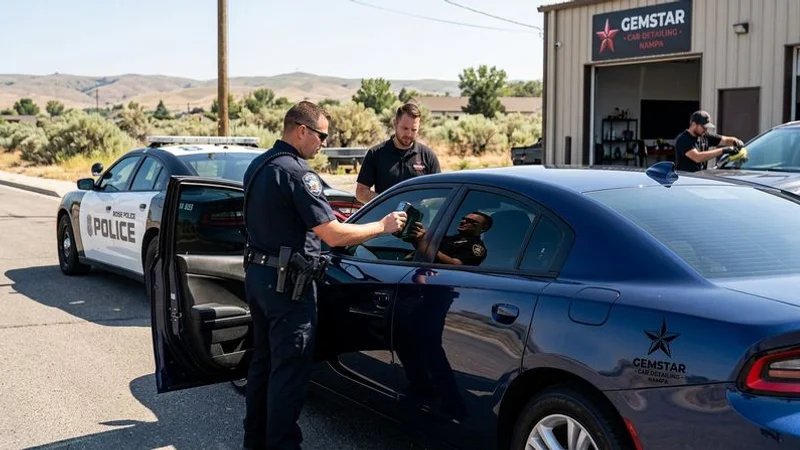
We remind drivers that tint law enforcement varies across Nampa and Canyon County. Law enforcement officers use a specialized tint meter to measure your VLT percentage during a traffic stop. A window tint violation in Idaho counts as a non-moving traffic infraction.
We warn customers that illegal tint typically results in a fix-it ticket. The standard fine for this infraction is 67 dollars. You usually have a thirty-day window to either remove the illegal film or bring it into compliance.
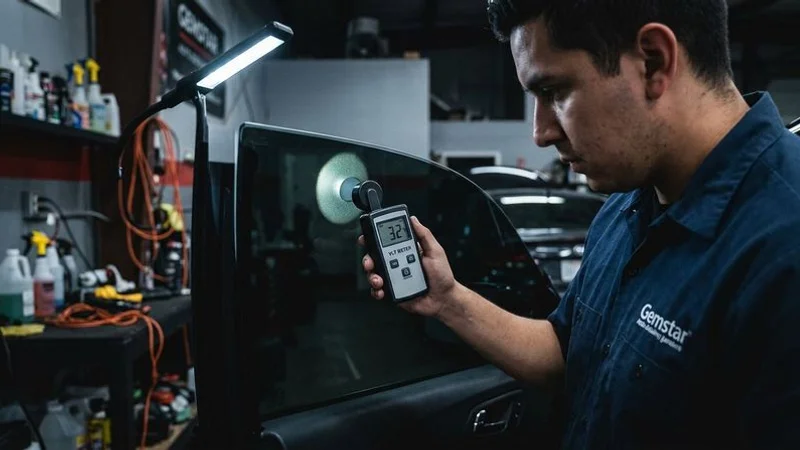
Our technicians can remove non-compliant film and demonstrate the correction to the court. Fines escalate quickly if you fail to correct the violation in time. Excessively dark windows might also fail an annual vehicle inspection.
Factory Tint vs Aftermarket Tint
We frequently encounter vehicles that already have factory-tinted rear windows. This dyed privacy glass typically measures between fifteen and twenty-five percent VLT right from the dealership. Adding aftermarket film on top of factory tint drops the combined VLT significantly.
We use a simple calculation to show clients the final result.
If your SUV has factory tint at twenty percent VLT and you add an aftermarket thirty-five percent film, the combined result is approximately seven percent VLT.
This extremely dark result remains perfectly legal for rear windows on Idaho SUVs and trucks.
We carefully measure your factory glass before recommending an aftermarket front window shade. This precise measurement keeps the combined VLT within the thirty-five percent limit. GemStar Car Detailing ensures you get the appearance you want without the legal risks.
Our Recommendation for Nampa Drivers
We customize our suggestions based on the extreme Treasure Valley climate. July in Nampa brings average high temperatures around 93 degrees Fahrenheit. The area receives nearly 3,000 hours of blazing sunshine every single year.
We typically recommend the following ceramic tint setup to handle this heat:
| Vehicle Type | Front Window VLT | Rear Window VLT |
|---|---|---|
| Sedans | 35% | 20% |
| Trucks & SUVs | 35% | 5% to 15% |
This combination delivers maximum heat rejection and privacy while staying fully legal. Ceramic technology provides the best combination of heat rejection and UV protection.
We highly recommend pairing your window film with a professional ceramic coating. This dual approach gives your vehicle complete protection from the harsh elements. Both services work together to preserve your vehicle’s long-term value. For comprehensive interior protection against UV fading, schedule a professional interior detail alongside your tint installation.
Get Legal, Professional Tinting
We ensure every window tinting installation complies perfectly with state law. GemStar Car Detailing serves Nampa, Meridian, Caldwell, and the entire Treasure Valley.
Booking your appointment takes just a few minutes online.
We invite you to call us at (208) 953-9102 for expert guidance on the right shade. Protect your interior and enhance your driving experience today. Secure your spot before the intense summer heat arrives.
Kayden Hofler
Co-Founder & Operations Manager
Co-founder managing Gemstar's mobile detailing operations across Treasure Valley.
Related Service
View Our Window Tinting Service →