How Idaho Winter Affects Your Car's Clear Coat and How to Protect It
Understanding how Idaho's winter conditions including road salt, freezing temperatures, and gravel damage your vehicle's clear coat, plus proven protection strategies.
Co-Founder & Lead Detailer · January 17, 2026
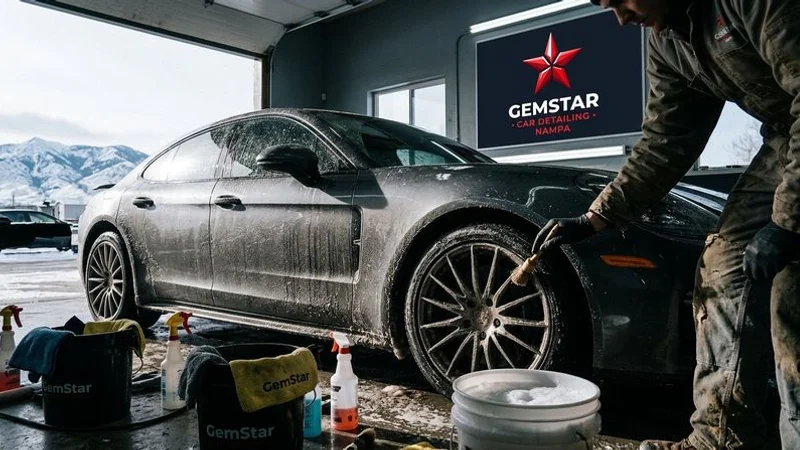
Our team at GemStar Car Detailing Nampa established this business to set a new standard for excellence in the auto detailing industry, committing to provide premium protection for your vehicle. Busy professionals and luxury car owners frequently ask how Idaho winter affects your car.
You probably notice that hazy, white film coating your vehicle after just a few days of driving in January.
We regularly see vehicles arrive at our shop with paint damage that was entirely preventable. Local road chemicals and freezing temperatures create a perfect storm of conditions that attack your clear coat.
The underlying deterioration works silently until visible flaking appears.
Our goal is to help you understand these specific threats so you can make informed decisions. Review the actual data behind these winter hazards to protect your investment.
Professional-grade strategies exist to defend your daily driver against the freezing elements.
Road Salt: The Biggest Factor in How Idaho Winter Affects Your Car
Our local Ada County Highway District (ACHD) crews rely heavily on liquid magnesium chloride down to minus 20 degrees Fahrenheit. This chemical is highly effective at melting ice on roads like I-84.
The liquid dries into a hazy, white crystal that bonds aggressively to your clear coat.
We find that this sticky film is much harder to remove than traditional rock salt. Microscopic pores in your paint trap the solution, allowing it to eat away at the surface.
Untreated magnesium chloride acts like fine sandpaper if you try to wipe it off dry.
Our technicians consistently repair salt corrosion on a few specific vulnerability points.
- The lower rocker panels directly behind the front wheels.
- The exposed metal components within the wheel wells.
- The seams along the bottom edges of the doors.
- The leading edge of the hood.
Industry experts recommend rinsing the vehicle with lukewarm water to dissolve these salts before applying any soap. Canyon County and Ada County apply these chemicals extensively from November through March to keep Nampa, Meridian, and Boise areas safe.
Our team always warns clients that traditional road salt is hygroscopic, meaning it actively attracts and holds moisture against your car. A highly corrosive solution forms and slowly degrades the paint down to the bare metal.
Visible damage like peeling or bubbling often indicates years of invisible, molecular-level deterioration.
Freeze-Thaw Cycling
We track local weather patterns to anticipate the exact types of damage vehicles will face. The Boise area experiences an average winter season lasting about three months, with January lows hitting 25 degrees Fahrenheit.
Daytime highs often push up to 38 degrees, causing accumulated ice to melt.
Our region’s rapid temperature swings create dozens of destructive freeze-thaw cycles every single month. Melted snow seeps into microscopic imperfections in your paint surface during the warmer afternoons.
That trapped water expands violently as temperatures drop below 32 degrees at night.
We see this physical expansion force tiny cracks open further, creating significantly larger paint defects. Subsequent thaw cycles allow even more moisture to penetrate the compromised clear coat.
The table below illustrates how different seasonal extremes stress your exterior finish.
| Environmental Stressor | Primary Mechanism | Clear Coat Impact |
|---|---|---|
| Winter Freeze-Thaw | Water expands by 9% when freezing. | Cracks micro-fissures wide open. |
| Summer Heat | High UV index bakes the surface. | Causes oxidation and fading. |
| Road Chemicals | Acidic bonding to the clear coat. | Eats away the top protective layer. |
Our shop frequently handles vehicles where existing swirl marks provided the perfect entry point for freezing water. Addressing minor scratches in the fall prevents this physical expansion process from destroying the surrounding paint.
Invisible micro-damage slowly transforms into highly visible flaking over the course of a single winter.
Gravel and Sand Damage
Our local road crews spread coarse sand and gravel on steep inclines to provide traction during icy storms. Safety measures unfortunately turn into paint-damaging hazards for daily commuters.
Passing cars kick up loose gravel on high-speed routes like Franklin Boulevard, Karcher Road, and I-84.
We notice that winter rock chip damage is substantially worse than standard summer wear. The grit stays on the asphalt for months instead of washing away in a quick rainstorm.
“Treating winter road grit as a minor annoyance is an expensive mistake, because high-speed impacts immediately expose your base coat to corrosive magnesium chloride.”
Our front bumper inspections reveal that the hood and fenders take the absolute worst beating. Side doors also suffer from the dirty spray generated by larger trucks passing on the highway.
Physical barriers provide the only true defense against this flying debris.
Ice Scraper Damage
We frequently fix deep gouges caused by well-meaning owners using hard plastic ice scrapers on their paint. Clearing snow from the hood or roof with the wrong tool drags frozen grit straight across the clear coat.
Severe micro-marring occurs instantly when you apply pressure to a dirty, frozen surface.
Our recent reviews of local data show that professional paint correction in Boise costs between 300 and 1,100 dollars to fix these self-inflicted scratches. The smartest approach involves using a soft snow brush to gently sweep away loose powder.
Dedicated scrapers should only ever touch your solid glass windows.
We highly recommend pulling the snow closer to your body rather than pushing it aggressively across the panels. Proper technique saves you hundreds of dollars in professional polishing fees come spring.
Follow these professional guidelines for safe snow removal.
- Use a dedicated foam broom designed specifically for delicate auto paint.
- Start at the roof and pull the snow gently down to the ground.
- Leave a thin layer of snow on the paint rather than scraping down to the surface.
- Warm up the car to melt the bottom layer of ice naturally.
Winter Car Wash Myths
Our clients often ask if washing a car during winter is completely pointless. Drivers assume the vehicle will just get dirty again the moment they leave the parking lot.
Skipping your regular wash actually maximizes the corrosive effect of trapped road salts.
We stress that leaving magnesium chloride on your vehicle for weeks guarantees permanent clear coat degradation. Another harmful myth suggests that spraying hot water will melt the salt away much faster.
Sudden temperature changes cause thermal shock, which can literally shatter a freezing cold clear coat.
Our team advises using lukewarm water to safely rinse the surface before scrubbing. Automatic brush washes pose another massive threat during the colder months.
Spinning bristles trap gritty winter road sand and slap it repeatedly against your vehicle.
We always suggest finding a touchless automatic wash if you cannot wash the car by hand in a heated garage. Premium touchless systems safely blast away the heavy grime without grinding sand into the finish.
Compare the impact of different wash methods during the winter season below.
| Wash Method | Winter Paint Safety | Primary Drawback |
|---|---|---|
| Touchless Automatic | Very High (No physical contact) | Harsh chemicals can strip natural carnauba wax. |
| Brush Automatic | Low (Traps and drags road grit) | Causes severe micro-marring and swirl marks. |
| Professional Hand Wash | Excellent (Controlled process) | Requires more time and a heated facility. |
How to Protect Your Paint This Winter
Apply Ceramic Coating Before Winter
Our top recommendation for winter defense is a professional ceramic coating applied before the freezing temperatures arrive. This liquid polymer creates a chemical-resistant barrier that actively repels road salt and magnesium chloride.
Tests confirm a high-quality ceramic coating lasts two to five years, whereas traditional carnauba wax breaks down in just one to three months.
We love how the hydrophobic properties make your bi-weekly winter washes incredibly fast and easy. Contaminants simply slide off the slick surface rather than bonding tightly to the paint pores.
Proper curing requires controlled temperatures, making early fall the perfect time for application.
Consider PPF for High-Impact Areas
Our paint protection film packages provide a literal shield against flying gravel and sand. Urethane film absorbs the kinetic energy from rock impacts that would normally chip the front bumper.
Combining PPF on the high-impact zones with a full ceramic coating delivers the absolute best winter protection available.
We specifically target the hood, fenders, and side mirrors with this durable, self-healing material. Physical barriers remain the only guaranteed way to stop high-speed rock chips.
Many drivers find this investment pays for itself by maintaining a flawless factory finish.
Wash Every Two Weeks Minimum
Our maintenance schedule requires a thorough wash every fourteen days, regardless of the upcoming forecast. Regular cleaning interrupts the chemical bonding process of corrosive liquid deicers.
Focus the high-pressure rinse heavily on the lower body panels and the undercarriage where salt concentrates the most.
We suggest using a pH-neutral soap to clean the surface without degrading your existing sealants. Touchless washes work wonderfully for this routine bi-weekly maintenance.
Consistency is far more important than achieving a perfectly spotless finish during a snowstorm. Pairing regular washes with professional window tinting also helps protect your interior from harsh winter UV exposure.
Apply a Paint Sealant
Our fall preparation packages often include a synthetic paint sealant for drivers on a tighter budget. Synthetic polymers offer stronger chemical resistance than natural wax, usually holding up for about three to six months.
This barrier slows down the salt damage enough to get you safely through the worst of the season.
We remind clients that sealants cannot match the extreme durability of a true ceramic coating. Reapplication becomes necessary right as the spring thaw begins.
Affordability makes this a popular mid-tier option for daily commuters.
Address Paint Damage Before Winter
We urge owners to schedule paint correction before the first heavy snow falls. Existing chips and deep scratches provide an open door for moisture and salt to attack the bare metal.
Touching up these small entry points stops the rapid spread of winter rust entirely.
Our detailers carefully seal these vulnerable spots using specialized, color-matched paint pens. Proactive repairs cost significantly less than replacing heavily rusted body panels a few years later.
A smooth, corrected surface also helps protective coatings bond much more effectively.
Schedule a Spring Detail
Our final step in the seasonal cycle is a comprehensive exterior detail once the freezing temperatures retreat. A deep decontamination wash extracts all the embedded minerals and iron particles left over from the slushy roads.
Early detection of minor clear coat issues allows for inexpensive fixes before the damage requires a full repaint.
We use specialized iron removers to dissolve the microscopic metal shavings kicked up by snowplows. A thorough inspection ensures your vehicle survived the harsh winter months without permanent scarring.
Starting the warm season with a clean slate keeps your car looking incredible year-round. Do not forget to schedule an interior detail at the same time to extract the salt, mud, and moisture tracked into your cabin all winter long.
Prepare Your Vehicle for Idaho Winter
We refuse to let another harsh season dictate how Idaho winter affects your car.
GemStar Car Detailing offers professional ceramic coating, durable paint protection film, and comprehensive exterior detailing. Professional preparation remains the smartest way to handle Idaho’s toughest driving conditions.
Our team proudly serves Nampa, Meridian, Caldwell, and the entire Treasure Valley area. Book your winter protection appointment online or call us at (208) 953-9102 today.
Don’t wait until the first major freeze to protect your automotive investment.
Justin Finch
Co-Founder & Lead Detailer
Co-founder of Gemstar Car Detailing with 15+ years of detailing expertise.
Related Service
View Our Exterior Detailing Service →