Ceramic Tint vs Dyed Tint: Which Should You Choose?
A detailed comparison of ceramic and dyed window tint to help Treasure Valley drivers choose the best option for Idaho's hot summers and cold winters.
Co-Founder & Lead Detailer · February 26, 2026
Many drivers assume that a dark window film automatically guarantees a cooler cabin.
You might find yourself asking the common question: Ceramic Tint vs Dyed Tint: Which Should You Choose?
The truth is that visible darkness and heat rejection are two completely different things.
We established Gemstar Car Detailing Nampa to set a new standard for excellence in the auto detailing industry, and providing premium education is a core part of that mission. Clients regularly visit us struggling with uncomfortable commutes because they chose the wrong film technology.
Upgrading your vehicle with professional window tinting requires understanding the specific materials going onto your glass. You need to know exactly how different films perform under the intense Idaho sun.
I’m going to break down the hard data comparing standard dyed films against advanced ceramic options. Let’s look at the statistics, explore the specific performance differences, and map out the best long-term choice for your vehicle.
Understanding Dyed Window Tint
Dyed window film represents the most traditional and affordable entry point into the market. Manufacturers create this product by sandwiching a layer of dye between a mounting adhesive and a protective polyester top coat. The dye absorbs solar energy to reduce the amount of visible light passing through the glass.
This absorption creates the dark aesthetic many drivers want for privacy. A standard dyed installation across a typical four-door sedan in the US averages between $200 and $350 in 2026. Price remains the strongest selling point for this older technology.
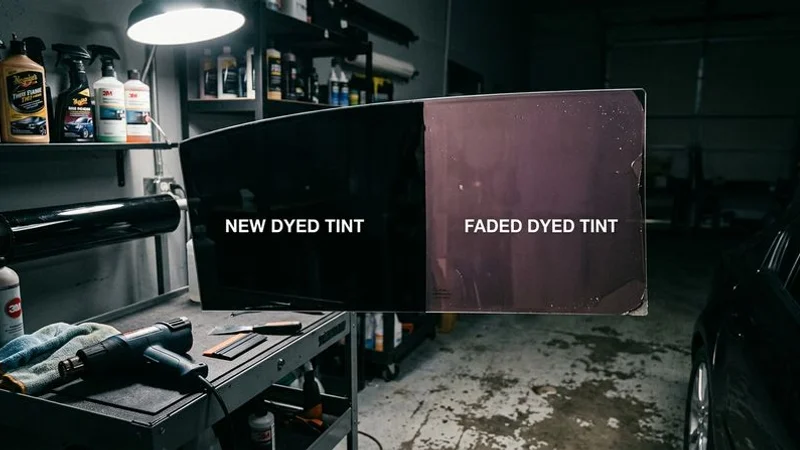
Our installers frequently remove aged dyed films from vehicles across the Treasure Valley. The limitations of this basic material become painfully obvious after just a few summers in our local climate.
How Dyed Tint Performs
Dyed materials do an adequate job of blocking visible glare and providing privacy. The glaring weakness lies in how this material handles infrared radiation. Infrared energy is the specific wavelength that causes you to feel burning heat on your skin.
Recent 2026 industry data shows that dyed films block a mere 5 to 15 percent of infrared heat. A 100-degree July afternoon in Nampa means massive amounts of thermal energy will still penetrate your vehicle. The dyed material absorbs that heat, turns your glass into a radiator, and bakes the interior.
Prolonged sun exposure causes three distinct types of permanent failure in dyed materials:
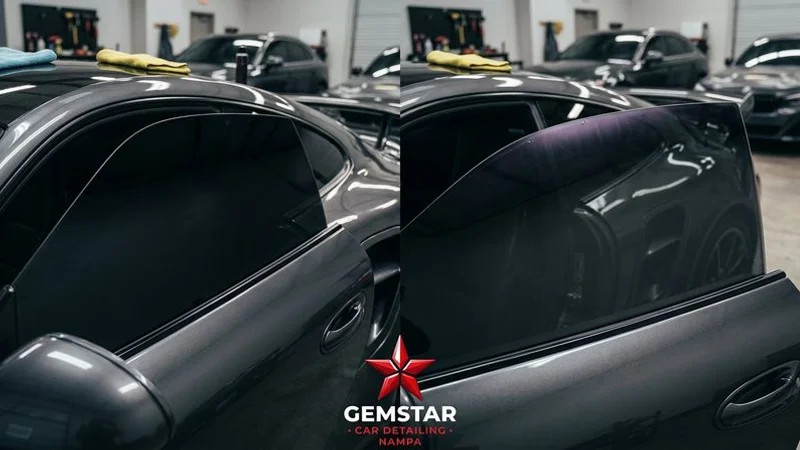
- Color Shifting: UV radiation breaks down the dye molecules, turning the film from black to a noticeable purple hue within three years.
- Adhesive Degradation: Constant thermal cycling causes the glue to fail, resulting in bubbling along the window edges.
- Performance Loss: As the dye fades, the film loses its already limited ability to block glare and solar energy.
This chemical breakdown forces a complete replacement cycle. You will then face an additional $50 to $150 removal fee before any professional can apply new tint.
Understanding Ceramic Window Tint
Ceramic window film utilizes the latest advancements in nanotechnology to control solar energy. Manufacturers embed microscopic, non-conductive ceramic particles directly into the polyester layers instead of relying on cheap dyes. This structural difference completely changes how the glass interacts with sunlight.
These advanced nano-ceramic particles act as a powerful filter. They specifically target and reflect both ultraviolet radiation and infrared heat before it enters your cabin. Our team recommends this technology for clients seeking maximum interior protection without necessarily wanting pitch-black windows.
Quality ceramic materials carry a premium price tag for a good reason. A full vehicle installation typically ranges from $400 to $800 in 2026, depending on the size of the car and the specific film grade. You are paying for engineered performance that lasts the lifetime of the vehicle.
How Ceramic Tint Performs
The performance metrics of ceramic technology completely outclass traditional dyed options. High-end ceramic products block between 85 and 98 percent of infrared heat.
Real-world testing shows that premium ceramic films can lower interior temperatures by 12 to 18 degrees Fahrenheit on scorching summer days.
Because ceramic products contain zero dyes, they are completely immune to fading or color shifting. The film maintains its factory-fresh appearance and optimal clarity for over ten years. The non-metallic nature of the ceramic particles means zero interference with your electronics. Your cell phone, GPS navigation, and highway toll tags will operate perfectly.
Head-to-Head Comparison for Idaho Drivers
Understanding the technical specifications is helpful, but seeing how these films handle the local environment makes the decision clear. Idaho forces your vehicle to endure brutal summer heat and harsh winter freezes. The right film must withstand these intense seasonal shifts.
Heat Rejection
This specific metric dictates your daily driving comfort from June through August. The Treasure Valley regularly sees summer highs push past 95 degrees. Ceramic technology actively reflects that infrared heat away from the glass. Dyed tint simply absorbs the heat until the glass becomes saturated.
Have you ever touched a dark, dyed-tinted window in July? The glass feels burning hot because it is radiating trapped solar energy directly onto your passengers. Our clients immediately notice the difference during highway commutes. Rejecting up to 98 percent of infrared heat means your air conditioning cools the cabin faster and works less hard, which can subtly improve your fuel efficiency on I-84.
Durability in Idaho’s Climate
Extreme temperature cycling rapidly exposes the weaknesses in budget materials. Dyed films simply lack the structural integrity to survive years of expanding and contracting glass. They typically require complete replacement within three to five years.
Ceramic particles remain inherently stable regardless of the outside temperature. This advanced engineering allows manufacturers to back ceramic products with lifetime warranties. A proper installation ensures the film will never bubble, peel, or turn purple.
Here is a clear breakdown of how the two technologies compare:
| Feature | Standard Dyed Tint | Premium Ceramic Tint |
|---|---|---|
| Infrared Heat Rejection | 5% - 15% | 85% - 98% |
| Average Lifespan | 3 - 5 Years | 10+ Years (Lifetime) |
| Color Stability | Fades to purple | Will never fade |
| Signal Interference | None | None |
| Average 2026 US Cost | $200 - $350 | $400 - $800+ |
UV Protection
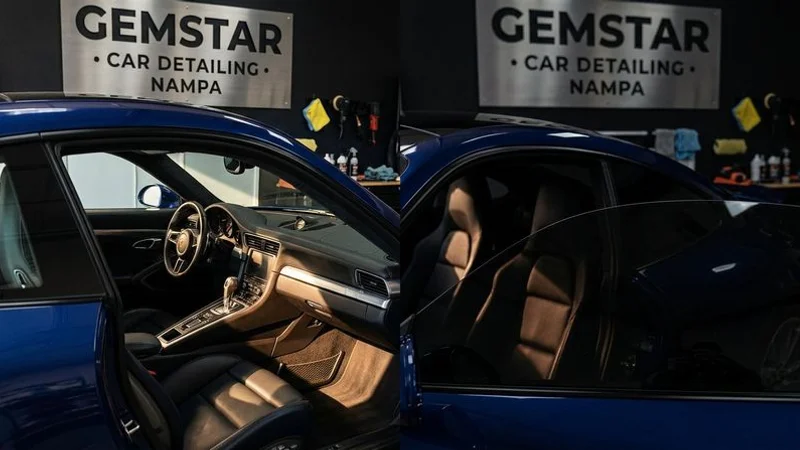
Both film types provide defensive barriers against ultraviolet rays, but the details matter significantly for your health. Factory car glass offers very uneven protection. A 2026 Skin Cancer Foundation report highlights that standard windshields block 96 percent of UVA rays, but untreated side windows block only about 71 percent.
Recent medical studies show that US drivers receive up to six times more UVA exposure on the left side of their bodies due to inadequate side-window protection.
Premium ceramic films block 99.9 percent of all UVA and UVB rays, functioning like an SPF 1000 sunscreen for your skin. We highly advise taking this interior preservation seriously. UV radiation relentlessly attacks your dashboard, leather seats, and plastic trim. Adding paint protection film on exterior panels provides even more comprehensive defense against the sun. Combining a high-quality ceramic film with regular interior detailing is the most effective strategy to prevent premature cracking and fading.
Cost
The initial sticker shock of ceramic film often pushes budget-conscious drivers toward dyed alternatives. Paying $250 for a full dyed installation feels like a smart savings compared to a $600 ceramic quote. The math changes dramatically when you look at a five-year timeline.
A dyed film will almost certainly require replacement within that window. You will pay a $100 removal fee for the old adhesive, plus another $250 for the new application. Our cost analysis shows that the total expense of maintaining dyed tint quickly surpasses the one-time investment in a premium ceramic product. Drivers planning to keep their vehicle for more than three years will always save money in the long run by choosing ceramic.
Signal Interference
Older metalized window tints used tiny metallic flakes to reflect heat. These metal layers successfully cooled the cabin but effectively turned the car into a Faraday cage, blocking cellular and GPS signals.
Neither modern dyed tint nor nano-ceramic tint contains any metal. Both options allow RF signals to pass through the glass without interruption. Ceramic simply manages to provide superior heat rejection without relying on outdated metallic layers.
Ceramic Tint vs Dyed Tint: Which Should You Choose?
Making the final call depends entirely on your budget, your ownership timeline, and your comfort priorities. We always ask clients to consider how long they plan to keep the keys.
Choose dyed tint if:
- You are operating on a strict, immediate budget.
- You plan to sell or trade in the vehicle within the next two years.
- Your primary goal is aesthetic darkening and privacy.
- You rarely drive during the hottest parts of the day.
Choose ceramic tint if:
- You want maximum temperature reduction for Idaho summers.
- You plan to own the vehicle for three years or longer.
- You frequently commute with young children or pets in the back seat.
- You want medical-grade UV protection for your skin and leather surfaces.
- You prefer to make a single, lifetime investment in your vehicle’s comfort.
Our top recommendation for Nampa drivers is overwhelmingly in favor of ceramic technology. The extreme temperature swings in the Treasure Valley demand a material that will not degrade. The initial cost difference vanishes when you factor in improved comfort, reduced air conditioning strain, and a permanent lifespan.
Pairing your upgraded window film with a professional ceramic coating creates comprehensive vehicle protection. Your car will reject solar heat from the inside while repelling dirt and contaminants on the outside. For the ultimate package, consider our full detail packages to address every surface at once.
Get Your Windows Tinted Right
Upgrading your vehicle with the right technology makes every single commute more enjoyable. Answering the question of Ceramic Tint vs Dyed Tint: Which Should You Choose? comes down to protecting your investment and your health.
GemStar Car Detailing offers professional window tinting using premium ceramic film for clients across Nampa, Meridian, Caldwell, and the Treasure Valley. We ensure every piece of glass receives a flawless, computer-cut application that will last a lifetime. Book your appointment online or call us at (208) 953-9102 for a free consultation.
Justin Finch
Co-Founder & Lead Detailer
Co-founder of Gemstar Car Detailing with 15+ years of detailing expertise.
Related Service
View Our Window Tinting Service →